






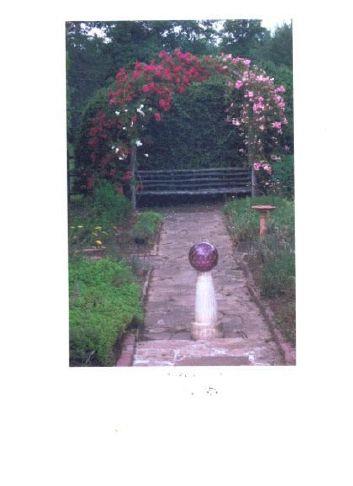
There is nothing more pleasing to the eye of a flower lover than a well-designed garden. Worldwide, tourism of well-regarded public and private gardens is big business and one of the most active and popular recreational pastimes.
A flower garden should not just have a nice array of blooming or architectural plants but should be designed in a way to make physical and visual access easy. For example, landscape architects stress that a well-designed flowerbed allows the visitor to see all of the blooms in a casual walk through without having to backtrack to see a plant hidden from view by a taller plant or by a bed design with too much depth with no way to access plants on the far side of the bed.
For the novice gardener, an easy way to design a flowerbed is with the help of a pliable garden hose or hoses. Garden hoses can be manipulated to form pleasing shapes and sizes before the hard work of clearing the grass from the future flowerbed begins.
While laying out the shape of the flowerbed it is important to keep in mind the following questions: Will it be easy to walk around or through the flowerbed? Will the size of the flowerbed bed be reasonable and in line with the time the gardener will have to tend the new endeavor? Given that a well-planned flowerbed is not a cheap proposition, can the gardener afford the investment to fill the flowerbed with plants?
With regard to the layout of the new flowerbed, the gardener must be realistic with regard to the size of the bed. The first and foremost consideration with regard to the size of the flowerbed is how much time and energy the gardener will have to maintain the bed? Most readers have heard the expression, “He has bitten off more than he can chew.” So, each gardener must think ahead and ask himself or herself, “Can I handle all of the work necessary in getting involved in this project?”
Cost is also an important factor to consider before leaping into a new flowerbed project. Of course, the size of the bed will determine in large measure the cost of it. The larger the bed the more expense to be incurred. If the bed is to be adorned with plants grown from seed or cuttings, the cost should be reasonable. Most well-established gardeners are keen to share plants with novice gardeners at no cost. Daylilies and Iris always need dividing and cuttings from roses make a nice gift. The indefatigable daffodil or narcissus lives forever and can be easily dug and given to friends or other gardeners.
However, if the bed will be filled with garden center plants or plants from the mail-order flower producers, a moderately sized flowerbed could cost several hundred dollars. For example, an accent plant for the flowerbed such as a miniature conifer could cost over one hundred dollars or more. A nice specimen Japanese maple to use as a centerpiece for the new flowerbed could cost a few hundred dollars.
So, probably it would be wise for the potential gardener to think on a small scale while considering garden design. After a successful and no-stress season or two, the gardener could then plan on a larger flowerbed design.
David Parmer is a retired attorney of Hinton. His two main hobbies are gardening and writing. He has gardened for over 50 years at his various homes. His wife, Barbara, a retired teacher, is also an avid gardener and both are Master Gardeners. David created the gardens at his former home, Greenbrier Cliffs, in Talcott. He is the author of four nonfiction books about his hometown of Burnsville in Braxton County and has five more books and short stories pending publication.