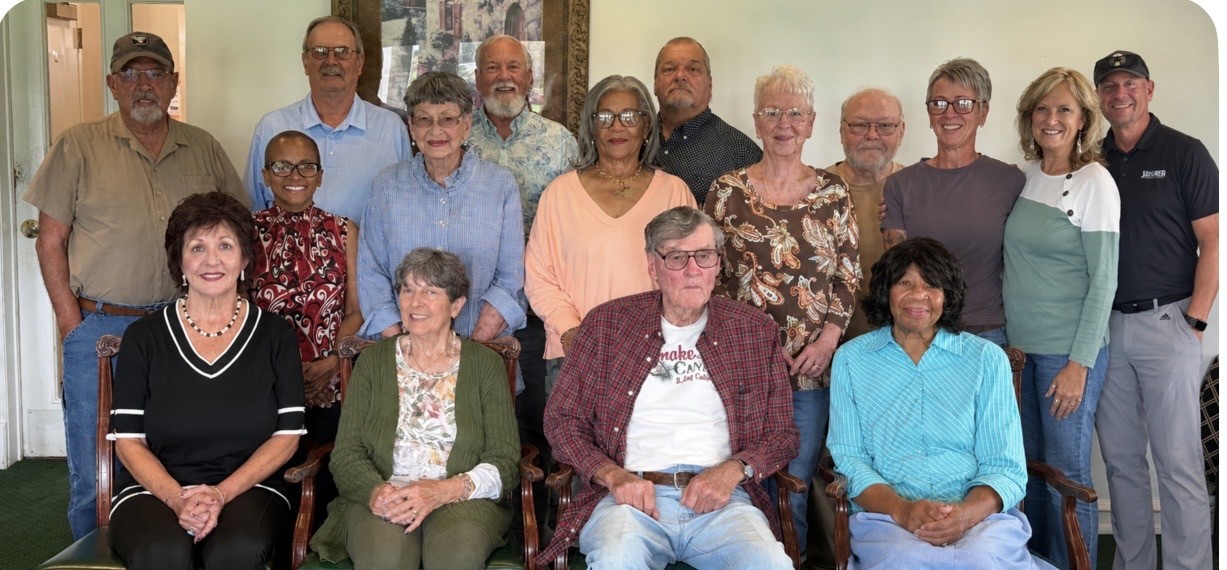







Story submitted by: Myra Ziegler
Between 1972 and 1977, the number of public libraries in West Virginia grew from 89 to 175! This was considered somewhat of a miracle in the library world.
The person given credit for this astonishing growth was Fred Glazer. Fred was hired in 1972 to be the Executive Director of the West Virginia Library Commission, the state agency in charge of West Virginia’s public libraries. Fred behaved like circus “barker” P.T. Barnum in that he was an outspoken and very effective advocate for West Virginia’s libraries.
Now, there are public libraries in every state in the nation. For the most part, these are local entities, organized by towns or counties to provide services to the people in those communities and supported by local tax dollars. In the larger cities in West Virginia, this has long been the case, but in the more rural and poorer parts of the state, where dollars were scarce, libraries before Fred were few and far between.
Fred arrived at a good time to change that. Federal dollars, called revenue sharing, which provided extra money to communities to support things like libraries, were available at that time. Fred sent out a fleet of large trailers—bookmobiles—to many of the places across the state that did not have libraries. These Flying Book Expresses were wildly, unbelievably popular. County commissioners and city council members saw the long lines of people waiting to get on the bookmobiles and understood that their citizens wanted and needed permanent, full-time libraries, which they could afford thanks to the influx of revenue-sharing money. It was in 1977 that the Summers County Commission issued the charter that established the Summers County Public Library.
Fred developed the “instant” library to replace the overworked Flying Book Expresses. These were inexpensive octagonal prefab buildings that could be quickly built to serve as libraries. They popped up in communities all over the state; you can visit one in Ronceverte.
He convinced the West Virginia Legislature to establish a line item in the state budget—Grants-in-Aid to Public Libraries—to help with operating expenses, and he established a training program at Marshall University to help train the people hired to run the libraries. As head of the West Virginia Library Commission, Glazer helped develop and implement a statewide library automation network, which greatly improved interlibrary communications and gave patrons greater access to library materials throughout the state. The system, designed by Vinod Chachra of Virginia Tech Library Systems (now VTLS), went active at its Charleston-based hub in November 1982. Other library networks have since been modeled after West Virginia’s example.
Fred was fired as head of the Library Commission in 1996. It was quite the scandal.
The West Virginia Library Commission was combined with the Department of Tourism in 2025. The agency that played such a significant role in expanding library service throughout West Virginia no
longer exists as an independent state commission. Its responsibilities are now carried out within a larger state government structure.