






Everyone knows that a sulphur spring is what gave Pence Springs its fame and fortune back in the day. People would travel from all around to “take the waters” for its healing properties. The railroad establishing a depot in what was first called “Stockyards” in the 1870’s allowed people to drink what was believed to be healing waters from across the country.
Then with the popularity of auto travel in the late 1910s to the 1930s made Pence Springs much more accessible to anyone seeking the healing benefits. Until the depression struck in 1929, the hotel had upwards of hundreds of people to enjoy the amenities and entertainment offered to the public. As well as visitors that would go just down over the hill to the spring.
But something very few people are aware of is that the Pence Springs Resort had not 1 but 2 springs on the property. The first is the sulphur spring that Anderew Pence took 1st place at the World’s Fair for in 1904. The second is the little known magnesia spring. “A magnesia spring is a natural mineral spring containing dissolved magnesium compounds, primarily magnesium sulfate (Epsom salts) and magnesium carbonate. Historically, these springs were highly sought after for health tourism because the water was believed to aid digestion, cure skin ailments, and relieve muscle tension.”
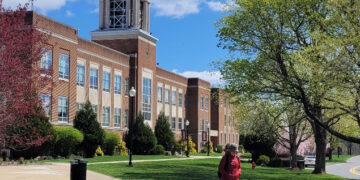
I was recently asked by David Sibray to assist him in a story he was working on for West Virginia Explorer titled: “Hidden healing spring on historic Pence Springs resort grounds draws new interest.” After discussing this with my father, who was the head of maintenance of Greenbrier Academy for Girls located in the old Pence Springs Hotel building, told me he had located an old concrete wall structure against the bank down over the hill a bit on the left as you start up the driveway.
He then remembered that George Kounse of Pence Springs, who passed away at 91 in 2018, told him of the 2nd spring, that it is a magnesia spring and is located just as you start up the driveway. George was a life long resident of Pence Springs and was a caddy for the Pence Springs Golf Course in the 1930s.
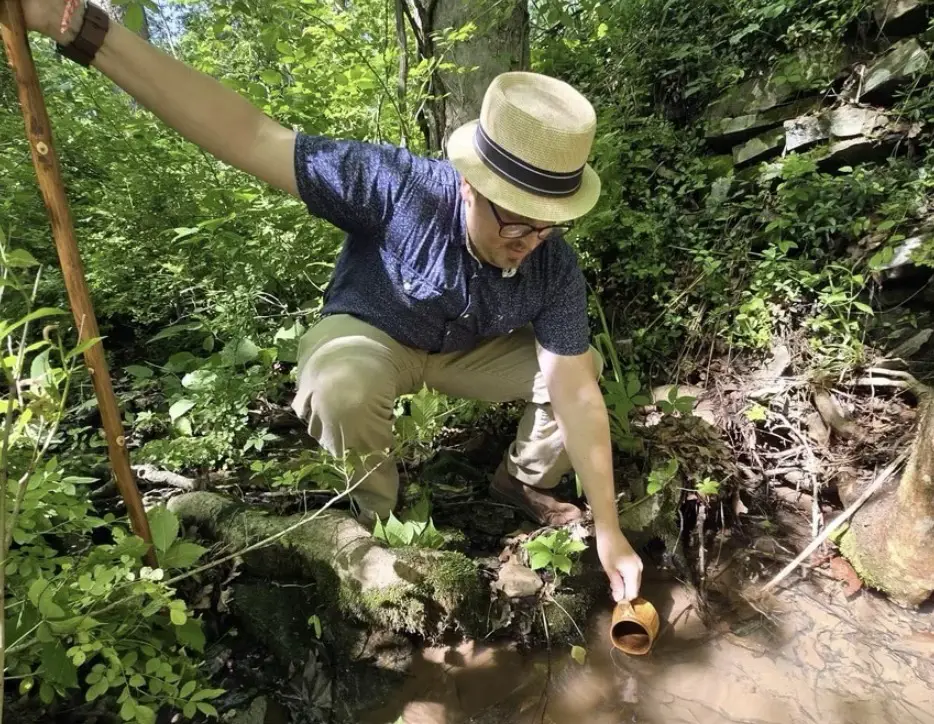
The photo you see is of me “tasting” the magnesia spring after we delved down over the bank through thick brush to access the spring. After David posted the story on Facebook, it began to draw a lot of attention. My good friend and fellow historian Karen Wygal came through as she always does.
She posted screenshots of a book that proves what was a myth until just a few weeks ago. She found a 1927 book titled “Mineral Waters of the United States and America Spas” by William Edward Fitch, M.D. He talks in great detail about the Pence Springs Hotel’s scenic beauty which provides a restful relaxing stay, the sulphur water spring which he listed as “Spring No. 1 Water.”
He then lists the nearly unheard of magnesia spring as “Spring No. 2 Water” and explains it as “This is a magnesium water, heavily charged with natural carbonic-acid gas. The bicarbonates of magnesium, calcium and sodium, together with the sulphates of potassium and sodium, combine to produce an admirable alkaline diuretic water of potent therapeutic properties useful in the treatment of a wide range of disorders where such a water is indicated.”
Now that we possess the proof, it is time to dig in even further and find out if there was a spring/bath house where dad found that old concrete wall. I am figuring there is at least some mention buried in the state archives from when The West Virginia State Prison for Women opened in the Pence Springs Hotel in 1947. Perhaps where they removed a structure in this location?
There is a small concrete water box located at the base of a rock right below this between the Pence Springs Community Church driveway and the entrance to the hotel. I had always assumed this was a watering box for the horses transporting guests from the railroad depot to the hotel would have taken away from the guests to water and graze them at this location.
At that time up to the 1920s, the main road through Pence Springs went from the Pence Springs depot, up the hill to the church, and across to the hotel. This water box would have been below the hotel and away from guests. It is believed that it is fed by the magnesia spring due to its close proximity to the spring. I was excited to have done my part in discovering the truth about one of the many mysteries of the Pence Springs Hotel property, as obsessed as I have always been about its history.