




Dear Recycle Lady,
I have some paper that I can’t tell whether it is office paper or slicks like a magazine. Do I put this paper in the office paper bin or in the magazine/slicks bin? Uncertain Recycler
Dear Uncertain Recycler,
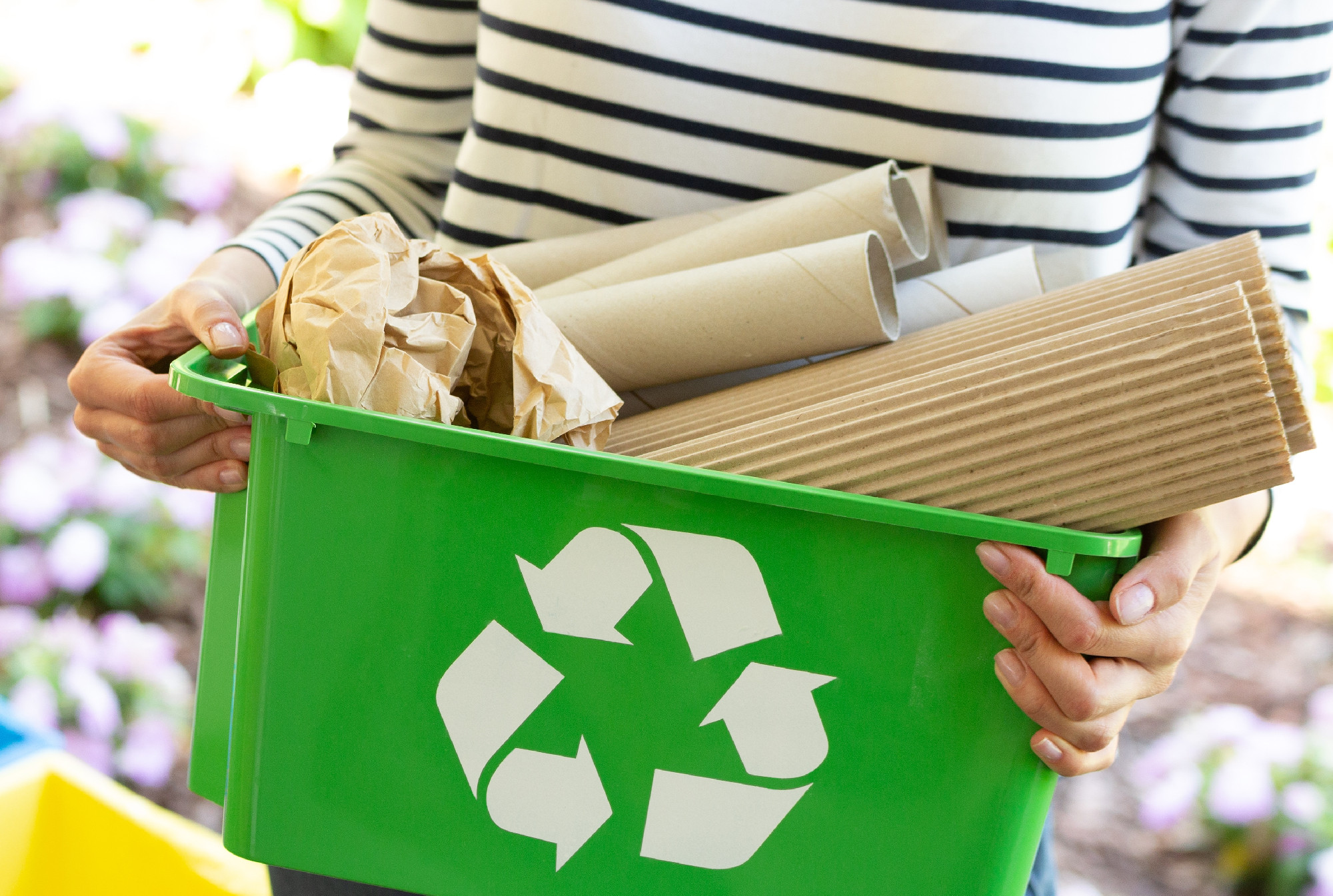
Paper made from wood pulp or from recycled paper, regardless of whether it is office paper or magazine slicks, can be recycled. The difference is that magazines/slicks have a glossy or matte finish that has been applied as a coating that covers the entire page. The pages may also be heavier, bulkier and brighter. Newspapers often have inserts that look like a slick but may be just heaver newspaper with a brightly colored ink. They are the ones that may be doubtful. Put them in the magazine/slick bin as inks and coatings can affect the recyclability the office paper. Magazines/slicks are more forgiving of mistakes than office paper, so when in doubt put it in the magazine bin.
Dear Recycle Lady,
How many countries have banned plastic bags? Traveler
Dear Traveler,
According to worldatlas.com, the first countries to totally ban plastic bags were Bangladesh in 2002 and Rwanda in 2008. As of 4/29/26, there are 103 countries that have passed either a full or partial ban on plastic bags and 32 countries that have opted for a charge per bag. All Australian states have a total ban on single-use plastics. The U.S. does not yet have a country-wide ban on plastic bags. However, 12 states and 500 cities have restrictions on plastic bags. The most common type of plastic now used for these single-use bags is Polyethylene PET (#1 plastic). According to Plastic Education, plastic was first created in 1898. In 1933, plastic bags were invented in England and in 1953, high-density polyethylene HDPE (# 2 plastic) that makes plastics light and strong was invented. During WWII, plastic was a highly guarded secret as the U.S. military first used it as an insulating material to place radar into airplanes. In 1965, Karl Ziegler, one of the chemists who invented HDPE, won the Nobel prize for chemistry. In 1979, single-use plastic bags first appeared in the large grocery store chains.
Dear Recycle Lady,
What are PFAS? Not a Chemist
Dear Not a Chemist,
Per- and polyfluoroalkyl substances, better known as PFAS, are a class of human-made chemicals that were developed in the late 1930s. They are long-lasting chemicals that break down very slowly. The Environmental Protection Agency (EPA) has cataloged over 14,000 different PFAS that are used in cleaning products, cosmetics, stain-resistant clothing, paints, furniture, and more. According to the director of the Environmental Health Science Center at Oregon State University, “PFAS have the strongest bond in chemistry, which means that there are no natural processes in us or in the environment to break these chemicals down.” Thus, they are called “forever” chemicals. PFAS make materials resistant to stains, grease, and water, but they also put our health at risk. According to epa.gov, PFAS have been found in humans and animals all over the world.” They are in our water, in the air we breathe, and in the soil around the globe. They are found in clothing, cosmetics, carpets, shampoos, food packaging, firefighting foam, and insulation of electrical wires, to list only a few of
The products they exist in. Since thousands of PFAS chemicals are found in so many different consumer, commercial, and industrial products, it is challenging to study and assess the potential human health and environment risks.
Surprising
News: According to www.sciencefocus.com, mosquitoes are the most dangerous animal on Earth. They spread deadly diseases like malaria, West Nile Virus, and Zika that kill between 500,000 and one million people globally each year.
Have questions about recycling, or interesting information about recycling? Send questions or requests to recycleladywv@gmail.com. Dear Recycle Lady is sponsored jointly by the Greenbrier Recycling Center and Greenworks Recycling.