





Barger Springs is a little-known historic resort community located along the Big Bend of the Greenbrier River in Summers County, West Virginia. The area served several distinct purposes during its tenure as a mineral spring hub, starting with its pre-Civil War development as a stopping point for local hunters and trappers, and reaching its zenith from 1903 to 1929 as a highly successful commercial resort.
“Isaac Carden, the earliest documented owner of the property, ran a primitive pioneer setup. He provided a double-log cabin, a hewn-log house, a regional store, and a row of log cabins to accommodate travelers. Ownership later passed to William H. Barger, Carden’s son-in-law, who built a permanent stone springhouse on the site in 1868. However, Barger utilized the land primarily for farming rather than commercial hospitality. Following the disruptions of the Civil War era, the land remained quietly in the Barger family as farmland for roughly forty years.”
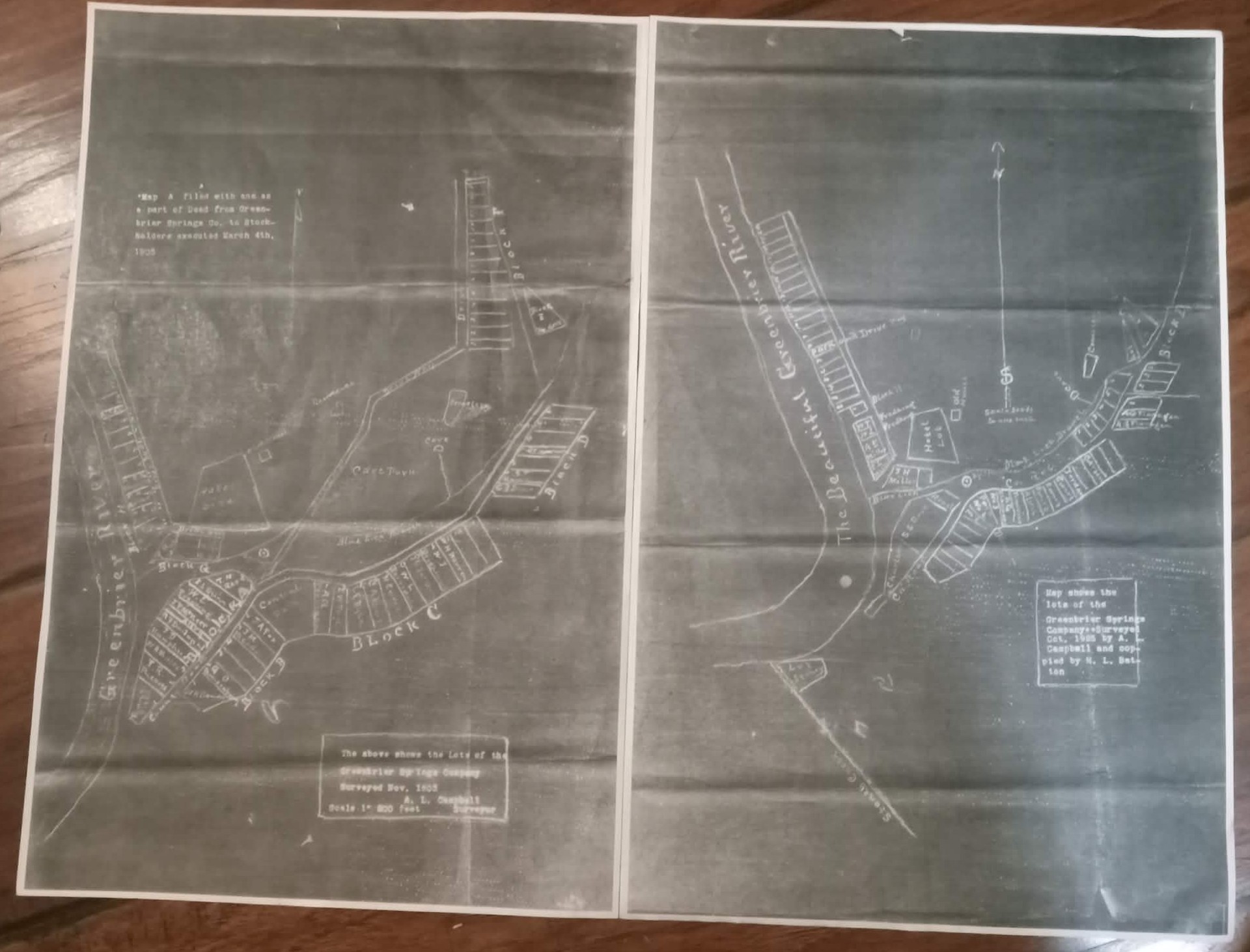
A major shift occurred in 1903 when a group of thirty investors, primarily hailing from nearby Hinton, purchased the property and formed the Greenbrier Springs Company. They divided the old farmland into lots to establish a hotel complex and individual vacation cottages. The crown jewel of this heyday was a 25-room, three-story frame hotel supplied with water from the adjacent river via a steam-powered water pump reserve. The mineral spring water was heavily promoted for its unique healing properties—specifically targeting chronic kidney, liver, and digestive ailments–which spawned a successful commercial water-bottling operation.
Judge James H. Miller, famous for writing the definitive 1908 volume History of Summers County, West Virginia: From the Earliest Settlement to the Present Time, was notably one of those original thirty investors.
Like virtually all small mineral resorts of the era, its ultimate demise was met by the economic devastation of the Great Depression. Today, nearly all of the grand hotel complex is gone. However, several of the original cottages still stand along the main road, marked by the unique, historic Barger Springs stone walls running in front of them. As well as the original spring house.
Having rare pieces of this history in a private collection such as the 1905 and 1925 Greenbrier Springs Company survey maps, my friend and fellow Summers County historian Jimmy Costa gave me these copies just last week. Alongside the two original store ledger books that I already had in my collection, is an incredible asset for preserving the county’s heritage. Aside from occasional vintage postcards, formal records of the “Greenbrier Springs” chapter of Barger Springs remain exceedingly rare.